



Technologies to transform how people can heat and better insulate their homes are some of the 10 clean energy innovations through to the final of the £2 million Manchester Prize.
The Manchester Prize is funded by the Department of Science, Innovation and Technology, and is designed to reward UK-led breakthroughs that support the public good, grow the economy, improve public services, and help the transition to net zero.
Heating Homes From The Outside In
The finalists include EnergyWall by Underheat working in partnership with University of Salford. EnergyWall upgrades a building’s walls, warming or cooling from the outside, effectively turning bricks into radiators that maintain internal temperatures all year round.
EnergyWall analyses a building, then designs and installs pipes into insulation panels for the walls of a building. The solution is said to be ideal for social housing, working to cut energy bills and tackle internal condensation issues that cause mould.
Giving solar panels a second life
Green Loops by University of Wolverhampton, in partnership with German company ABCircular, tackles the challenge of recycling end-of-life photovoltaic cells by creating high-efficiency solar panels from recycled materials. While there are tens of millions solar panels in the UK, the specialist infrastructure to dispose of and recycle them is currently lacking.
Green Loops uses machine learning to analyse the optical properties of materials and structures of solar cells. Using highly conductive, engineered MXene-based metamaterials, Green Loops optimises the design of solar cells to enhance energy performance and reduce manufacturing costs.
With the growing e-waste problem from old solar panels, the technology helps reduce waste and makes solar energy more sustainable.
A “Google Maps” for home heat loss
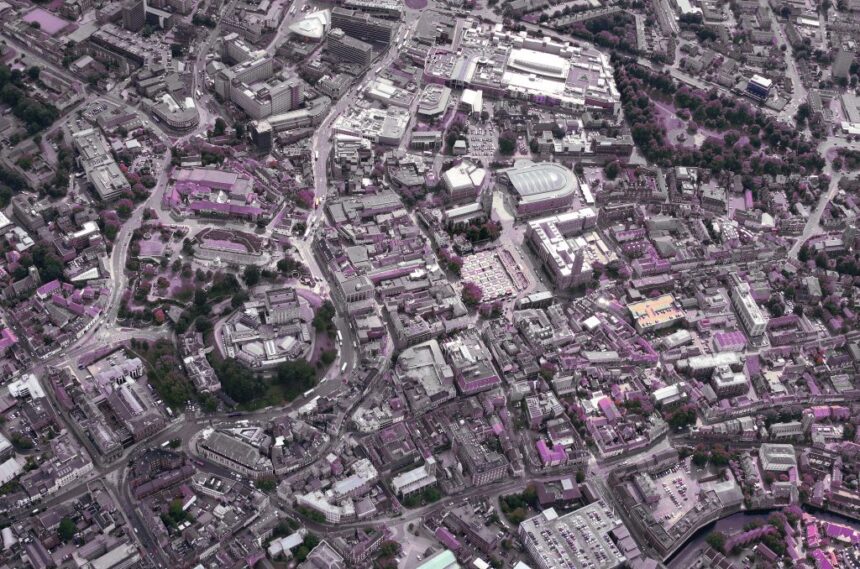
Rapid Thermal Performance Assessment algorithms (RaThPAs) by Kestrix uses AI processing and thermal drones to map heat from the skies above neighbourhoods: fast, 3D energy surveys from the sky.
RaThPAs would help utilities, councils and housing providers plan energy upgrades with fewer site visits. Like a “Google Maps of heat loss,” the system shows where buildings are leaking heat and can recommend fixes.
Other finalists include projects using AI technologies to help the logistics industry cut its emissions, and tech to ensure the energy grid remains balanced as more of the UK’s energy becomes sourced from wind and solar.
The 10 teams creating the smart solutions have received £100,000 each in seed funding, plus AI compute credits worth £60,000. The winner of the prize will be announced early 2026, and will demonstrate technical innovation and an evidenced road map to adoption by 2030.
Last year’s prize-winner, Polaron, accelerates the development of new materials from years to days, potentially increasing the energy capacity of electric vehicle batteries by 10%.