



Every January, as the calendar flips to a new year, fitness resolutions take center stage across the globe. In the U.S., this often sparks a rush to join gyms and adopt intense workout regimens, with sweat and determination symbolizing success. But what about in France? The country may evoke images of leisurely meals, artisanal pastries, and a culture seemingly untouched by the hustle of modern fitness trends. However, beneath these romanticized stereotypes, a quiet revolution is unfolding. From bustling cities to quaint villages and the tranquil countryside, France is redefining health and wellness.
The History of French Fitness Culture
Historically, France’s connection to physical activity revolved around tradition. By the late 19th century, physical education was a staple of school curricula, emphasizing vitality and discipline. Pierre de Coubertin, the Frenchman who revived the Olympic Games, saw sports as a unifying force. Yet, for much of the 20th century, fitness for its own sake was rare. Organized sports like soccer and cycling dominated, while casual exercise was relegated to leisurely strolls.
This cultural inertia began to shift in the 1980s, carried by the global fitness wave. Jane Fonda’s aerobics revolution crossed the Atlantic, and France’s Véronique de Villèle and Davina Delor embraced it with their TV show Gym Tonic. Airing on Sunday mornings from 1982 to 1986, the program brought aerobic routines into French homes, accompanied by the now-iconic “Toutouyoutou” anthem. Exercise was no longer just about discipline but enjoyment, marking the beginning of a broader embrace of fitness culture in France.
Do French People Go the Gym?
Fast forward to the present, and the fitness industry in France is booming. According to a 2024 Deloitte report, the market is valued at $4.3 billion, with over 6,500 fitness clubs serving approximately 6 million members. Membership costs vary widely, but the average monthly fee in France is around €30 to €50 ($33 to $55), compared to the U.S., where gym memberships can range from $10 at budget chains to over $100 at premium facilities. Boutique fitness studios offering specialized classes like barre, Pilates, and yoga are especially popular, with higher-end establishments such as L’Usine in Paris charging up to €200 ($220) per month for their luxury fitness experiences with spa-like amenities. Meanwhile, Basic-Fit, a Dutch-owned low-cost gym chain, and various American-style 24/7 gyms, have flourished across the hexagon, offering affordable, round-the-clock options that cater to a broader audience. This evolution underscores how fitness has grown into an essential part of modern French life.
French people, on average, exercise less frequently than Americans. Studies indicate that around 50% of French adults engage in some form of exercise weekly, compared to approximately 70% of Americans. However, the French emphasize integrating activity into daily routines, such as walking or cycling, rather than structured gym sessions. This approach reflects a broader cultural preference for balance over intensity.
Spending on fitness gear has also evolved significantly. In 2024, the average French consumer spent approximately €150 ($165) annually on fitness gear, compared to $300 per capita in the U.S. While the American market is driven by high-tech wearables and advanced home equipment like Peloton bikes, the French focus remains on practical and affordable options that support a more moderate approach to fitness.
Exercise Like the French
Cultural perspectives on fitness reveal a striking contrast between the United States and France. In America, fitness is often synonymous with aesthetics and trends, driven by the popularity of programs like CrossFit, SoulCycle, and Peloton. These approaches focus heavily on high-intensity training and visible results, aligning with a culture that often values extreme dedication. In France, however, fitness is woven into the fabric of daily life with a more relaxed attitude. Physical activity is seen as a way to enhance overall well-being and enjoy the simple pleasure of movement. Activities like yoga, Pilates, or even a tranquil countryside hike hold more appeal than intense gym sessions. For many French individuals, fitness is not about burning calories but about fostering mental and physical harmony.
The effectiveness of this lifestyle-focused approach is evident in the numbers. According to a 2023 Eurobarometer survey, 60% of French adults meet the World Health Organization‘s recommended 150 minutes of moderate-intensity weekly exercise, compared to just 53% of Americans. Obesity rates further highlight these differences, with 17% of French adults classified as obese in 2023, compared to 42% in the United States. While factors like diet and genetics influence these statistics, the French emphasis on incorporating physical activity into everyday routines—from walking to cycling—contributes to these outcomes.
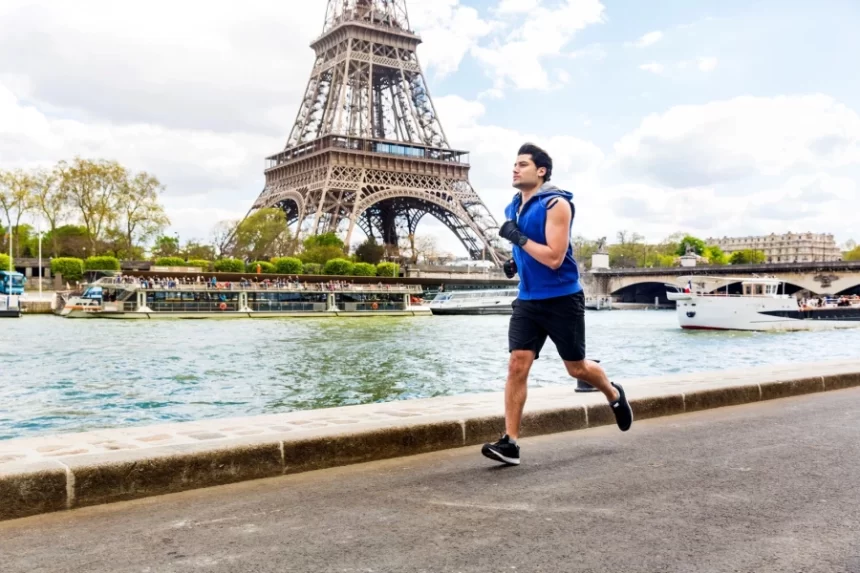
Complementing this growth in gyms and boutique fitness studios is a national focus on urban planning that supports active living. Cities are expanding pedestrian zones, adding cycling paths, and enhancing green spaces to make movement a seamless part of everyday routines. Paris now boasts over 1,000 kilometers (approximately 620 miles) of dedicated bike lanes, transforming the city into one of the most bike-friendly capitals in Europe. In Paris, the Vélib’ bike-sharing program has revolutionized mobility, making cycling a practical and popular way to incorporate activity into daily life. Joggers and cyclists are now fixtures along the Seine, and public parks like the Bois de Boulogne have added fitness stations and running tracks. The park has also become a hub for the city’s booming running groups, with clusters of enthusiasts gathering regularly to train, socialize, and explore its scenic pathways. Campaigns like “Bouger Plus” (“Move More”) aim to encourage lifelong fitness habits, especially among younger generations. This alignment of infrastructure and public health initiatives signals a cultural shift where activity is increasingly integrated into daily routines.
Beyond the cities, the French countryside offers unparalleled opportunities for outdoor activity. The GR20 in Corsica, renowned as one of Europe’s most challenging hiking trails, attracts adventurers from around the world. Meanwhile, the Loire Valley provides scenic routes for walkers and cyclists, blending fitness with a complete immersion in history and nature. Provence, with its rolling lavender fields, has emerged as a hub for yoga retreats and wellness weekends. These are just a few of the options highlighting how the French combine physical activity with their love of landscape and culture.
French Workout Culture Post-Covid
The COVID-19 pandemic reshaped fitness habits worldwide, and France was no exception. During lockdown, homes became makeshift gyms, with sales of items like yoga mats, resistance bands, and stationary bikes surging by 30% in the hexagon. Platforms like Decathlon Coach provided virtual fitness classes, ensuring people stayed active while isolating. As restrictions were lifted, there was an eager return to group activities. Running clubs, outdoor yoga sessions, and amateur sports leagues saw a resurgence, underscoring the human need for connection through shared physical pursuits.
The Paris Olympics
The Paris 2024 Olympics marked a pivotal moment in the nation’s fitness journey. Held last summer, the games catalyzed significant government investment in sports infrastructure, leaving a legacy that extends far beyond the competition. Venues such as the Stade de France have been repurposed for public use, offering spaces for activities ranging from swimming to climbing. Initiatives like “Sentez-Vous Sport” (“Feel Sport”) aim to sustain this momentum, encouraging participation across all age groups and income levels. The Olympics underscored a national commitment to making fitness accessible to everyone.