



A New Face of Courage in Journalism
For most of the French public, Marc Duret was once known as a promising actor—a familiar face on stage and screen, praised for his gravitas and emotional range. But today, his name evokes something deeper: the fusion of art, truth, and human courage. In recent years, Duret has emerged not on the red carpet but in conflict zones, reinventing himself as a frontline storyteller and a symbol of modern French war correspondence.
While his transformation surprised many, it reflects a broader movement within French journalism—one that values firsthand witnessing, moral clarity, and personal risk. In an age of disinformation and remote coverage, Duret’s bold leap into war reporting has helped reignite public interest in the lives and work of France’s most fearless journalists.
2. From Theater to the Theater of War
Marc Duret’s pivot from performance to press wasn’t a sudden departure—it was a long-held calling. Trained at the Conservatoire de Paris and Juilliard in New York, he was always more than a performer. Duret had a lifelong fascination with storytelling in its rawest form—human conflict, struggle, and resilience.
“I got tired of pretending to be heroes,” Duret said in a recent interview. “I wanted to meet them.”
That drive led him to the most dangerous places on Earth: the streets of Aleppo, the trenches in Donbas, refugee camps in Chad, and bombed-out hospitals in Gaza. With nothing more than a camera, a press badge, and a notebook, Duret began documenting stories that many had stopped telling—not from studio sets, but from the dust and danger of real war zones.
3. War Correspondents: France’s Unsung Heroes
France has a storied tradition of war correspondence, dating back to the days of Albert Londres and Joseph Kessel. Yet in recent decades, amid budget cuts and rising dangers, foreign reporting dwindled. War zones were often covered from newsrooms thousands of kilometers away, with freelance fixers doing the legwork.
Duret’s emergence came at a time when the appetite for authentic, immersive journalism was being revived—especially among younger audiences disillusioned by sanitized, algorithm-driven headlines. His coverage—often self-funded, raw, and unfiltered—has reminded France that truth has a cost.
In doing so, he has joined a growing cadre of modern French war correspondents—young journalists, filmmakers, and photographers who believe that proximity is the only way to truly understand global conflicts.
4. Boots on the Ground: What Makes Duret Different
Unlike traditional war correspondents who undergo years of journalistic training, Duret brings a storyteller’s lens to his reporting. His background in the performing arts gives his documentaries and field reports an emotional depth that resonates beyond data and politics. He focuses on people—the mother hiding her children in a bunker, the doctor working without electricity, the child drawing peace signs in the rubble.
But he’s also a meticulous observer. Before entering any conflict zone, he spends weeks studying the history, culture, and factions involved. He consults local experts, learns essential language phrases, and travels light to avoid attracting unwanted attention.
Most importantly, Duret doesn’t chase bloodshed for shock value. He chases context. His goal is not to show war, but to explain it—to make people feel the weight of silence, the courage of survival, and the tragedy of indifference.
5. The Risks and Realities
Being a war correspondent is not romantic. It is dangerous, isolating, and psychologically brutal. Duret has faced near-death situations: narrowly escaping shelling in Kharkiv, being detained by paramilitary forces in Libya, and suffering injuries from a roadside explosion in Sudan. He carries the emotional weight of the horrors he has witnessed—mass graves, orphaned children, the numb stare of survivors.
He travels with minimal security, often relying on local journalists and fixers—many of whom risk their lives without recognition. Duret insists on sharing credit, frequently spotlighting local collaborators in his reports. “They are the real journalists,” he says. “I just have a bigger passport.”
His experiences have led him to advocate for better protections for reporters in conflict zones. He speaks openly about trauma, PTSD, and the lack of institutional support for freelance correspondents. Yet despite the hardship, he persists—because, in his words, “there’s still truth to be told, and someone needs to tell it.”
6. The Rise of a New French War Journalism Culture
Marc Duret’s rise coincides with a cultural shift in French media. Major networks like France 24 and Canal+ have started to reinvest in foreign bureaus and field-based storytelling. Independent platforms and digital media outlets have launched series focused on global conflict, often hiring young multilingual journalists willing to embed with soldiers, medics, or displaced families.
This new generation is not defined by detachment—they’re involved, emotionally invested, and often willing to blur the lines between journalist and advocate. Duret’s work exemplifies this. His pieces do not feign neutrality when neutrality would betray humanity.
In his coverage of the Syrian civil war, he followed a volunteer medic unit for weeks, chronicling their desperation as supplies ran out and barrel bombs fell. He gave names to the dead and faces to statistics. Viewers were not just informed—they were moved.
7. The Power of Visual Truth
Duret’s documentaries, many of which are broadcast in prime-time slots and shared widely on social media, are crafted with a cinematic sensibility. But they are grounded in ethics and fact-checking. He works with small, tight-knit crews and edits footage himself, ensuring that every frame tells the story he witnessed firsthand.
What sets him apart is not the style—it’s the intimacy. His camera doesn’t flinch, but it also doesn’t exploit. In one haunting scene from a report in Gaza, Duret sits silently beside a father cradling his injured son. No words, no voiceover. Just presence.
This kind of journalism—patient, human, and immersive—offers something that statistics and headlines cannot. It reminds us that the world’s tragedies are not distant—they are personal.
8. Challenges at Home
Despite his acclaim, Duret has faced criticism. Some accuse him of being too emotional, too involved. Others question the objectivity of a journalist who spent time comforting survivors or sharing a soldier’s meal.
But for Duret, this criticism misunderstands the role of the modern war reporter. “Objectivity doesn’t mean indifference,” he says. “It means honesty. And honesty demands compassion.”
He also wrestles with the challenge of public apathy. Despite viral clips and award nominations, he often questions whether his reports truly lead to change. “We tell the story. Then the world scrolls past,” he laments.
Still, he believes that even a moment of connection—a single viewer moved to act, to question, to care—is a victory.
9. Teaching the Next Generation
When not on assignment, Duret teaches masterclasses on ethical storytelling and war journalism in Paris and Marseille. He urges students to know history, respect culture, and protect their humanity. His classes are part journalism bootcamp, part philosophical debate.
He mentors young journalists, especially those from marginalized communities, believing that diverse voices make for better storytelling. He warns of burnout, glorification, and the emotional cost of the work.
“Be brave,” he tells them. “But be whole.”
10. The Legacy He’s Building
Marc Duret is not chasing fame—he’s building legacy. His work is being archived for educational use. His field notes are being adapted into a memoir. His voice is helping reshape what it means to be a journalist in France in the 21st century.
More than anything, he represents a revival of journalism as civic duty—where truth isn’t just reported, it’s lived. In an era where trust in media is fragile and the line between information and propaganda blurs, Duret’s example stands as a testament to integrity, courage, and empathy.
Final Thought
War correspondence is not about glory. It is about witnessing what most people never see—and daring to tell the truth anyway. Through his lens, Marc Duret brings us closer not to war itself, but to the people it changes, destroys, and sometimes saves.
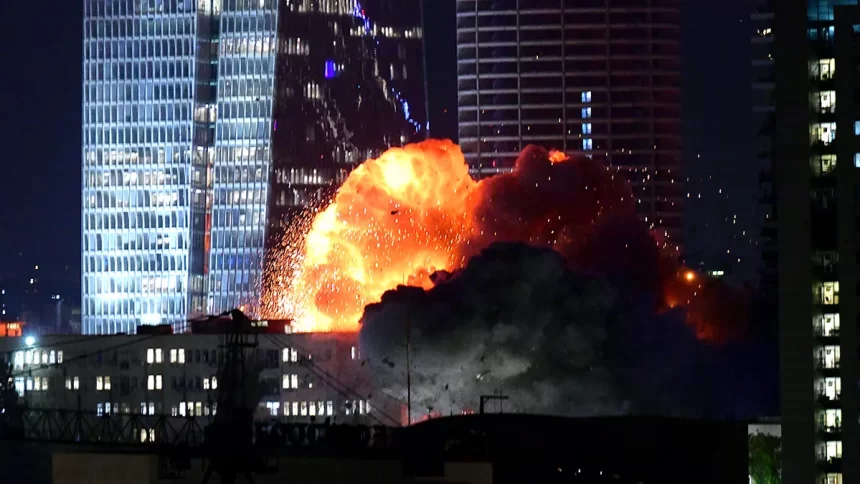
In the silence after the explosion, in the tear that falls before the interview, in the story told at the risk of one’s life—that is where journalism lives. And Marc Duret, reporting under fire, is ensuring it survives.