

From the Assembly Line to the Runway
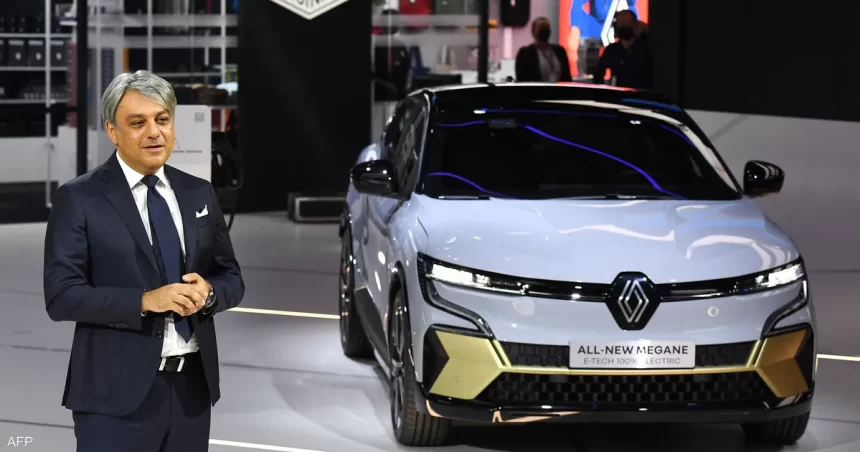
When Luca de Meo, the architect of Renault’s electric revival and a veteran of the global auto industry, was announced as the incoming CEO of Kering, the French luxury giant, the news sent ripples through two very different worlds: fashion and mobility. The move, equal parts surprising and strategic, signaled a bold convergence of precision engineering and experiential luxury, a cultural and commercial crossover few had anticipated.
To automotive insiders, de Meo was the charismatic Italian with a flair for brand storytelling, responsible for reinvigorating Renault’s battered image with a clear electric vision. To fashion executives, he was an outsider—but one with a track record of transforming heritage brands, mastering supply chains, and connecting emotionally with consumers. For Kering—home to Gucci, Saint Laurent, Balenciaga, and Bottega Veneta—the appointment represents a radical bet on systems thinking, brand engineering, and global discipline in a post-pandemic luxury market.
Chapter One: Who Is Luca de Meo?
Born in Milan in 1967, Luca de Meo studied business administration at Bocconi University and began his career at Renault in the 1990s. But it was at Fiat, Volkswagen Group, SEAT, and eventually Renault (again) that he made his mark as a transformative force.
At Fiat, he led the relaunch of the 500 as a retro-urban icon. At Volkswagen, he served as Chief Marketing Officer and was instrumental in brand alignment across the group. His most notable feat came at SEAT, where he turned a languishing Spanish manufacturer into a profitable, emotionally resonant marque for millennials. Then, at Renault, beginning in 2020, he inherited a company in crisis and delivered turnaround after turnaround—launching the “Renaulution” strategy, cutting losses, spinning off EV operations, and restoring investor confidence.
With a reputation for branding genius, emotional intelligence, and a deep understanding of consumer behavior, de Meo stood out in a world of gray-suited auto executives. His next stop? The rarified world of couture, leather goods, and lifestyle dreams.
Chapter Two: Kering’s Leadership Crossroads
The decision to bring de Meo into Kering’s orbit did not emerge from a vacuum. In recent years, the luxury group—long admired for its innovation and brand curation—has faced stagnating growth and rising pressure from archrival LVMH, which has surged ahead in both revenue and cultural dominance.
Kering had already seen Gucci’s golden decade wane, internal leadership reshuffles at Balenciaga after controversies, and the challenge of Gen Z’s fickle loyalty. With François-Henri Pinault seeking a strategic reset for the 2030s, the board opted not for another fashion insider, but for a systems builder—someone who could reimagine the organization as a high-performance engine, not just a creative carousel.
“Luxury is no longer just about product. It’s about precision, purpose, and platforms,” Pinault said during the leadership announcement. “Luca understands how to build lasting value in a volatile world.”
Chapter Three: Automotive Thinking, Fashion Timing
What exactly does an automotive executive bring to a luxury house?
The answer lies in de Meo’s toolkit—developed over decades in a sector known for tight margins, vast R&D cycles, and global complexity. His move to Kering comes with a vision of:
-
Brand stewardship through storytelling: Just as he turned the Fiat 500 into a cultural symbol, de Meo aims to deepen the emotional resonance of Kering’s labels without diluting their exclusivity.
-
Product lifecycle mastery: In fashion, freshness is everything—but supply chains remain fragile. De Meo’s experience managing multiple production timelines will be critical for smoothing Kering’s sourcing and delivery models.
-
Electrification parallels: The auto industry’s pivot to sustainability mirrors fashion’s growing eco-consciousness. De Meo has led multi-billion-dollar EV transitions; now, he’s tasked with embedding sustainable innovation in luxury’s DNA.
-
Software sensibility: In cars, UX design has become as important as engine torque. In fashion, digital experiences, personalization, and CRM platforms are the new battleground. De Meo has lived this convergence.
“In both industries, the iconic must meet the intelligent,” he told Le Figaro in his first public comment as CEO. “Luxury is not just a category—it’s a way of thinking. And that way must evolve.”
Chapter Four: Gucci, the Crown Jewel Reimagined
De Meo’s most closely watched move will be what he does with Gucci, Kering’s flagship brand, which once delivered nearly 60% of group profits but has faltered in recent years under inconsistent creative direction and brand fatigue.
Under de Meo, Gucci is expected to:
-
Adopt multi-channel narrative cycles, where physical products are tied to story-driven campaigns and digital communities.
-
Reintroduce design discipline, with curated seasonal drops rather than chaotic overproduction.
-
Expand into mobility and lifestyle collaborations—leveraging de Meo’s automotive network for joint projects that blend style and function (a Gucci electric bike or car interior could be more than speculative).
-
Increase the focus on AI-powered customization, drawing from the data-driven consumer models de Meo helped implement in car marketing.