



According to Meteo-France data, temperatures in France usually break the 30C barrier for the first time at the beginning of June every year. This date is – obviously – usually earlier in the south-west, and later in the north.
In 2024, Pau hit 32C, and Tarbes 30.5C, as early as April 6th. The current heat spike has seen temperatures almost nationwide soar past 30C. Heat spikes are a relatively common meteorological occurrence. It’s not unusual for temperatures to pass 30C at this time of year.
But it’s the intensity of this one that is so concerning for meteorologists and climate scientists. Some regions in the south-west saw the mercury rise as high as 35C – understood as the ‘very high temperature threshold’ .
Temperatures in the greater Paris Île-de-France region could reach a humid 30C on Saturday afternoon.
In the Rhône-Alpes, the heat will also increase, with highs frequently exceeding 30C , particularly in the plains of the Rhône Valley and around Lyon.
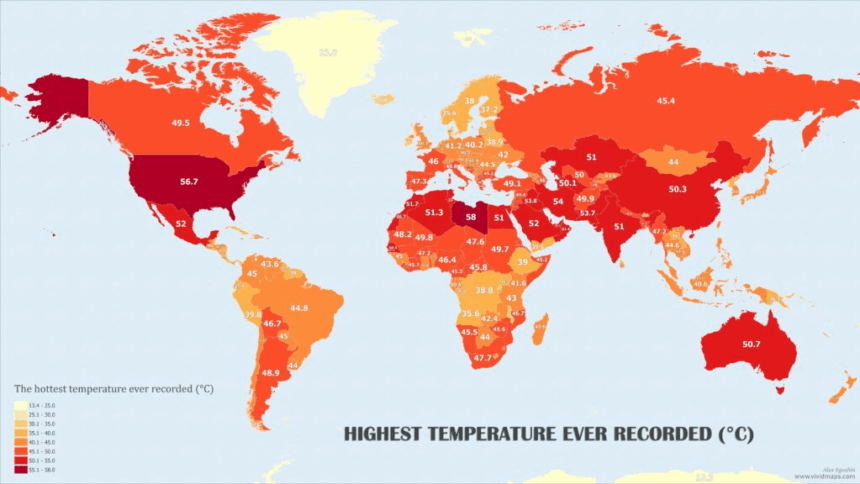
The highest-ever temperature recorded in May in France was in 2005, when Pissos, in the Landes, sweltered under a high of 38C. That month saw Paris hit 34C, while Orleans and Colmar both saw temperatures of 33C.
The good news for anyone struggling with the early summer heat is that it will be short-lived. The bad news is that it will be replaced by unsettled and often stormy weather.
By Sunday, storms are expected to spread from Nouvelle Aquitaine in the south-west to the north-east.
This will mark a change in the weather pattern, with more unsettled conditions across the country and temperatures gradually returning to levels more in line with seasonal norms.
Those, for the record, are around 20C in Paris, 22C in Bordeaux, 21.5C in Lyon and 18C in Lille. At this time of year, average maximum temperatures vary between 18C and 24C.
The first signs of stormy deterioration will be felt on Friday, starting in the far south-west of Nouvelle-Aquitaine, coming up from Spain. The first thunderstorms are expected at the end of the afternoon in the Pyrénées-Atlantique. They are expected to gain in intensity and extend over a large part of Nouvelle-Aquitaine in the evening.
As of Friday afternoon, six departments in the south-west were on yellow alert for storms: Gironde, Landes, Pyrénées-Atlantiques, Gers, Hautes-Pyrénées and the Lot-et-Garonne.
More may be added as the extent of the storms becomes clearer, while alerts may be upgraded, as the situation demands.
On Saturday, provisional storm warnings have been issued for: Nord, Pas-de-Calais, Somme, Aisne, Oise, Ardennes, Marne, Aube, Haute-Marne, Meuse, Meurthe-et-Moselle, Moselle, Vosges, Yonne, Côte-d’Or, Nièvre, Saône-et-Loire, Savoie, Haute-Savoie, Isère, Ain and Rhône; Loire, Drôme, Ardèche, Haute-Loire, Cantal, Puy-de-Dôme, Allier, Corrèze, Creuse, Haute-Vienne, Indre, Cher, Indre-et-Loire, Loir-et-Cher, Loiret, Eure-et-Loir, Seine-et-Marne, Essonne, Yvelines, Val-d’Oise, Paris, Hauts-de-Seine, Val-de-Marne and Seine-Saint-Denis.