



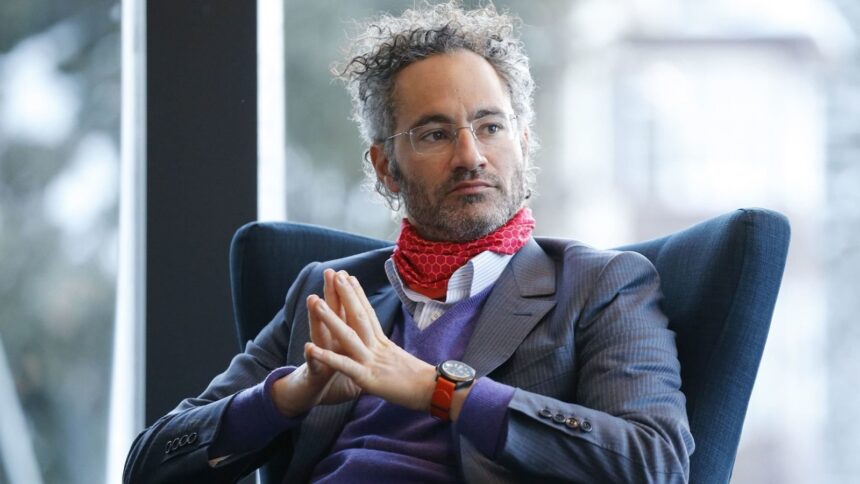
The Rise of a Reluctant Tech Titan
When Jean-Baptiste Renard founded Sentinelle, a small AI startup in a cramped co-working space on the outskirts of Paris in 2016, few imagined it would become one of Europe’s most consequential security tech firms. Today, Sentinelle Technologies is often dubbed “France’s answer to Palantir,” a comparison that Renard finds both flattering and misleading.
“We didn’t set out to mimic anyone,” he insists. “France has its own challenges, its own values. Our mission was simple: to create a sovereign, ethical, and highly effective AI platform for public safety and national resilience.”
That mission—part idealism, part pragmatism—has driven Sentinelle to the heart of Europe’s most sensitive AI deployments. From terrorist tracking to cyber defense, border protection to disaster response, the company’s software is now deployed in 11 EU nations, shaping how governments respond to the threats of a rapidly changing world.
2. The Seeds of Sovereignty
Renard’s path to security tech was anything but conventional. Born in Toulouse to a military father and a schoolteacher mother, he grew up with a fascination for systems—both human and mechanical. After graduating from École Polytechnique with a dual degree in mathematics and computer science, he turned down lucrative offers in finance and instead joined a French defense R&D lab.
There, Renard worked on early machine learning applications for logistics and surveillance. He quickly saw both the promise and the peril of AI in national security: the tools could save lives, but in the wrong hands—or guided by profit motives—they could just as easily undermine civil liberties.
“It was clear we needed sovereign technology—tools built in Europe, for Europe, by people accountable to public institutions,” he recalls.
In 2016, amid rising terror threats and geopolitical instability, Renard left government service and quietly launched Sentinelle. With a team of six engineers, most from elite French research labs, the company began prototyping AI models designed specifically for security agencies—models that prioritized privacy, auditability, and contextual accuracy over black-box performance.
3. The Palantir Parallel
The comparison to Palantir Technologies—the American big data giant known for its intelligence platforms—became inevitable as Sentinelle grew. Like Palantir, Sentinelle builds software that ingests and analyzes massive, complex datasets, often for police, defense, and border control agencies. Like Palantir, it offers predictive tools, real-time intelligence, and geospatial visualizations.
But where Palantir has often been criticized for opacity, US-centric contracts, and a mercenary approach, Sentinelle pitches itself as “openly accountable.” It refuses contracts in autocratic regimes, builds in algorithmic auditability, and has a standing ethics board comprising academics, former judges, and civil society leaders.
“We operate with a European soul,” says Renard. “That means human rights are not optional. It means transparency. And it means the technology must never outpace democratic oversight.”
4. The Breakthrough: Operation Trident
Sentinelle’s turning point came in 2018, during a joint anti-terror operation across France, Belgium, and Germany codenamed Trident. Working with Europol and France’s DGSI (domestic intelligence), Sentinelle deployed a prototype of its platform to analyze cross-border travel patterns, flagged social media chatter, and encrypted communications metadata.
Using graph-based deep learning and contextual filters trained on open-source intelligence, Sentinelle’s software identified a cluster of suspicious activity in Strasbourg—days before a planned attack on a Christmas market. The arrest of the suspects and the seizure of explosives saved dozens of lives.
From that moment on, Sentinelle was no longer just a promising startup. It became a key player in Europe’s counterterrorism and public safety infrastructure.
5. The Platform: Watchtower OS
At the core of Sentinelle’s offering is its flagship platform, Watchtower OS, an integrated AI operating system for national and regional security services.
Key features include:
-
Multimodal Data Fusion: Ingests video feeds, public records, sensor data, online content, and classified information with full compliance to GDPR.
-
Real-Time Situational Awareness: Geospatial interfaces allow command centers to monitor incidents, threats, and unit locations live.
-
Predictive Risk Models: Machine learning forecasts migration surges, infrastructure threats, civil unrest, or cyber-attacks.
-
Explainable AI Layer: Every decision or risk flag comes with an audit trail, enabling oversight bodies to verify model behavior.
-
Zero Trust Architecture: Ensures internal compartmentalization and data encryption at every level.
The software has been adopted by several French ministries, including the Ministry of the Interior and the Gendarmerie Nationale. Internationally, NATO command centers and Scandinavian border agencies have begun pilot programs.
6. Balancing Power with Principles
With great influence comes intense scrutiny. Critics, especially digital rights groups, have raised concerns about mass surveillance and potential misuse. Sentinelle has responded by opening parts of its codebase to third-party audits and publishing its AI ethics charters online.
It has also limited its AI’s application in facial recognition, citing “high risk for misidentification and civil liberty violations.” While some rivals pursue lucrative surveillance contracts, Renard insists on restraint.
“Just because we can build it doesn’t mean we should,” he says. “Ethics isn’t a marketing line—it’s our operational framework.”
7. Scaling Without Selling Out
Despite interest from major U.S. and Chinese venture firms, Sentinelle has remained fiercely independent. It raised funding from a mix of European defense grants, French public investment banks, and a few strategic investors bound by strict covenants on data sovereignty.
The company now employs over 350 people across Paris, Lyon, and Brussels, with a growing satellite office in Montreal focused on AI safety research. It also collaborates with research institutions such as INRIA and EPFL, ensuring its academic roots remain strong.
Sentinelle has begun exploring civilian applications for Watchtower OS in disaster response, pandemic modeling, and infrastructure resilience—carefully avoiding any commercial data harvesting.
8. A New Era of European Tech
Jean-Baptiste Renard’s rise mirrors a larger trend: Europe’s growing ambition to create sovereign digital infrastructure. In a world dominated by American and Chinese tech titans, European policymakers now recognize the need for homegrown capabilities—especially in sensitive sectors like AI, defense, and cybersecurity.
Renard is often invited to speak at EU Commission panels on AI ethics, data policy, and digital sovereignty. He’s been tapped to consult on France’s national AI strategy and has helped shape guidelines for AI deployment in law enforcement.
But he resists the “poster boy” label.
“The mission is bigger than me,” he says. “We need a whole ecosystem—engineers, regulators, watchdogs—pulling in the same direction.”
9. The Human Side of Intelligence
Despite building software that interfaces with some of the most sophisticated datasets on Earth, Renard remains deeply human-centered. He insists that AI should augment, not replace, human judgment.
“We don’t automate decisions about arresting someone or closing a border,” he emphasizes. “We offer intelligence that helps humans make better, faster, more informed decisions—with accountability built in.”
To that end, Sentinelle runs regular training for law enforcement officers, teaching not only how to use the tools, but also how to question their outputs and interpret results responsibly.
10. What’s Next for Sentinelle?
Looking forward, Sentinelle is developing new tools to detect disinformation campaigns, map critical infrastructure risks under climate change, and build interoperability layers for joint EU defense initiatives. It is also testing language models tailored for multilingual threat analysis, optimized for European contexts.
Renard is cautious but optimistic about AI’s future.
“Yes, the risks are real. But so are the opportunities—to make our societies safer, more responsive, more resilient. The key is to build slowly, transparently, and always in service of the public interest.”