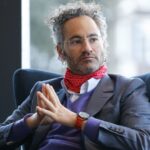


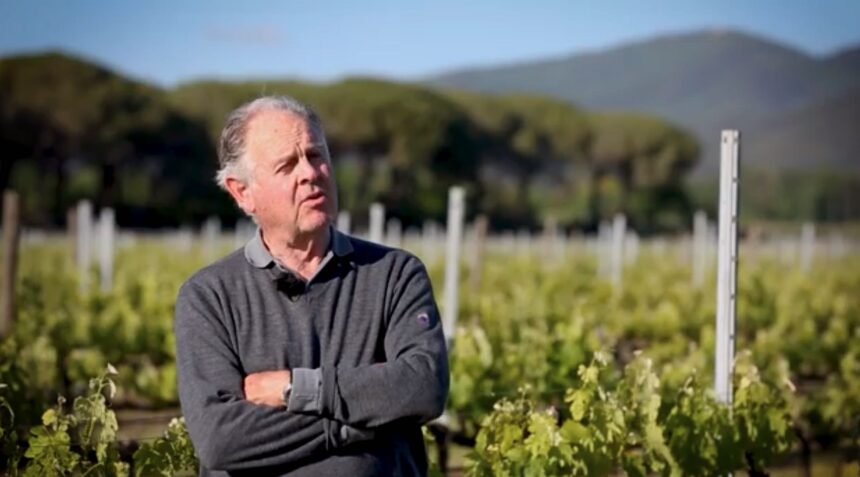
In the sun-drenched hills of the Loire Valley, where time seems to slow and the air carries hints of wildflowers and fermenting grapes, Luc Moreau walks the rows of vines planted by his grandfather nearly a century ago. For most, this would be a simple stroll through family history. For Luc, it’s something deeper—a ritual of connection to earth, family, and purpose.
What began as a modest, multi-generational vineyard in a sleepy French commune is now a name whispered in elite tasting rooms from Tokyo to Toronto. Luc Moreau has become a symbol of modern organic winemaking: meticulous, humble, and unyieldingly committed to authenticity. His journey from local vintner to global organic icon tells the story of passion meeting innovation, of tradition reimagined without compromise.
2. Inheriting More Than Land
Luc was born in 1984, the son of Michel and Anne Moreau, who ran Domaine Moreau—a family vineyard with five hectares of Sauvignon Blanc and Chenin vines. Luc’s earliest memories are filled with vineyard rhythms: pruning with his grandfather in early spring, the pungent fermentation scent in autumn, and the long, silent dinners after harvest where weather and yield were the only topics.
But Luc didn’t fall instantly in love with wine. As a teenager, he was more interested in ecology and climate science. He left for Paris to study environmental engineering, and later completed a master’s degree in sustainable agriculture in Montpellier. It wasn’t until his father fell ill in 2009 that Luc returned to Loire—at first reluctantly.
“I thought I was helping out for a season,” he once said. “But nature had other plans.”
3. From Conventional to Revolutionary
Upon returning to the domaine, Luc was struck by how little had changed. The wines were still excellent, but the methods felt outdated. The vineyard relied on chemical pesticides, monoculture planting, and high irrigation—practices that clashed with his ecological training.
He proposed radical changes: transitioning to organic farming, implementing biodynamic cycles, reintroducing native flora and fauna, and using natural yeasts rather than lab-grown strains. His parents resisted at first. “We don’t fix what isn’t broken,” his father said.
But Luc insisted. He began converting one parcel of the vineyard to organic farming. The first year was rough—yields dropped, mildew spread, and critics questioned his methods. But then something remarkable happened: the wine from that parcel won a regional gold medal. It had more depth, minerality, and a wild complexity that intrigued sommeliers.
Within five years, Luc had converted the entire vineyard to certified organic and was experimenting with biodynamic calendars and moon-phase harvesting. The Domaine Moreau label began appearing in organic boutiques and fine dining restaurants. Word spread.
4. Crafting Wine That Speaks
Luc’s philosophy is simple: let the land speak. He believes great wine is not made, but guided—encouraged to express its terroir honestly. That’s why he uses minimal intervention in both vineyard and cellar.
He avoids additives, filters sparingly, and favors long fermentation in old oak barrels that don’t impose flavor but instead allow oxygen to work its quiet magic. “I don’t want to create wine that tastes the same every year,” Luc explains. “I want it to tell you what kind of year it was.”
This authenticity struck a chord with a new generation of wine lovers—especially millennials and Gen Z—who value sustainability and transparency as much as taste. Luc’s labels began selling out not because of advertising campaigns but because of social media buzz, sommelier recommendations, and devoted word-of-mouth.
5. Exporting the Ethos, Not Just the Bottle
By 2017, demand for Domaine Moreau wines had skyrocketed. Distributors from the US, UK, Japan, and Australia began vying for allocations. Rather than simply increase production, Luc expanded his vision: to create a network of like-minded vineyards under a unified ethical philosophy.
He launched “Moreau Naturel,” a collective and export label that supports small organic winegrowers across France, helping them access global markets without compromising their values. The model was cooperative: Moreau provided branding, logistics, and sustainability coaching, while growers maintained creative control.
The model worked. Today, Moreau Naturel includes 18 vineyards in France, 3 in Spain, and 2 in Italy—all unified by a commitment to organic and low-intervention methods.
Luc also opened “Atelier Moreau” in Paris, a hybrid wine bar, education center, and showroom. It hosts tasting nights with growers, workshops on biodynamic viticulture, and even wine-pairing events with plant-based chefs. The space became a cultural anchor for France’s natural wine scene.
6. Overcoming Industry Resistance
Despite his success, Luc’s journey hasn’t been without resistance. Many traditional wine producers mocked his methods, calling them a fad. Regulatory hurdles slowed organic certification across regions. And at times, extreme weather—brought on by climate change—threatened his more fragile ecosystem-based approach.
But Luc adapted. He introduced agroforestry rows to protect against wind, trained vines lower to the ground to reduce drought stress, and adopted regenerative farming practices that actually improved the soil year over year.
His wines are now not only sustainable—they are resilient.
7. The Science of Sustainability
Luc doesn’t shy away from science. He collaborates with soil microbiologists and climate researchers to analyze how vineyard practices impact carbon sequestration, biodiversity, and long-term vine health. The data is then shared publicly via his website, setting a benchmark for transparency in the industry.
He also helped launch a research grant for young scientists studying the intersection of climate and viticulture. “We can’t just make sustainable wine,” he says. “We have to grow sustainable winemakers.”
In 2023, Luc’s vineyard became carbon-negative through a combination of soil health improvements, renewable energy installations, and low-emission logistics.
8. A Global Name, a Local Heart
Despite his international acclaim, Luc remains grounded. He lives in the same stone house he grew up in, bikes to the vineyard, and hosts local school groups to teach children about soil, insects, and the importance of pollinators.
Every year, he organizes Les Vendanges Ouvertes—an open-harvest weekend where visitors can help pick grapes, press them, and enjoy a farm-to-table feast with live folk music. The event draws hundreds, from curious tourists to Michelin-starred chefs.
Luc’s humility is perhaps his most distinguishing trait. “I’m not a winemaker,” he often says with a smile. “I’m just a listener. The vines are the artists. I’m just the translator.”
9. Awards, Accolades—and Refusals
Luc has won numerous awards: Best Organic Producer of the Year, Innovation in Biodynamic Farming, and even a Green Gastronomy Prize. His wines have appeared on wine lists at the world’s top restaurants, and international wine magazines often refer to him as “The Wine Whisperer.”
But he’s also famously declined several offers: buyouts from major wine conglomerates, invitations to mass-produce under a supermarket label, and even a reality TV series about his vineyard life.
“I didn’t get into wine to become famous,” he once told a journalist. “I did it because I want to taste something real.”
10. The Future of Domaine Moreau
Looking ahead, Luc is experimenting with ancient grape varieties once thought lost to disease or disuse. He’s also planting mixed-species hedgerows to support bird life, trialing clay amphora aging, and launching an educational podcast for young vintners.
He is mentoring his younger sister, Elise, who recently joined the business after studying fermentation science. Together, they plan to expand not in quantity, but in quality—deepening their commitment to natural wine and sharing what they learn with others.
Their shared vision: that in an era of climate anxiety and industrial oversaturation, wine can still be what it always was at its best—a quiet, honest expression of land, time, and care.