



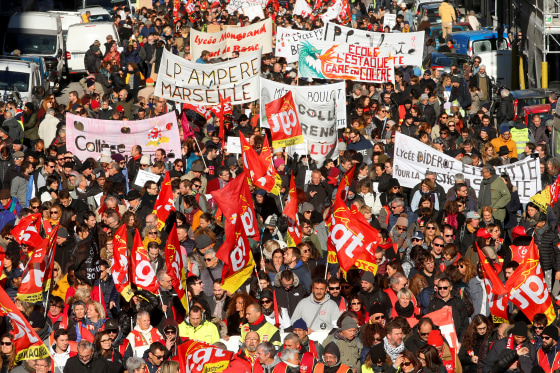
On September 18, 2025, France had one of its biggest protest days in recent memory. Called Black Thursday, the country saw huge demonstrations against President Emmanuel Macron’s government’s plans to cut spending. More than half a million people went to the streets, wanting the government to stop cutting the budget, changing pensions, and hurting public services. This piece looks at what happened that day, why it happened, and what it all means for France.
What Started It: Cutting Spending
The protests happened because the government wanted to cut €43.8 billion from the budget in 2026, suggested by the Prime Minister François Bayrou then. The idea was to lower the country’s debt, but many thought it was an attack on public services and workers’ rights. The planned cuts involved less money for healthcare, education, and welfare, which were already struggling.
Bayrou leaving on September 9 after a vote didn’t help calm people down. His replacement, Sébastien Lecornu, found himself with a split parliament and a public that didn’t trust the government’s money plans.
The Protests: Everyone Together
Unions like the General Confederation of Labour (CGT) and the French Democratic Confederation of Labour (CFDT) led the protests. They were joined by students, healthcare workers, teachers, and government employees. They all wanted the same thing: to fight the cuts and ask for a fairer split of the country’s wealth.
The protests happened everywhere, not just in big cities. Over 250 protests took place across France, from Paris to Marseille, Nantes, and Lyon. In Paris, people shouted Macron démission (Macron resign) and held signs that said Stop aux coupures (Stop the cuts). The Eiffel Tower and many subway lines closed, and pharmacies shut down to show support.
Most protests were peaceful, but things got heated in some places. In Paris, some small groups fought with the police, who used tear gas and arrested over 180 people nationwide. Groups like Black Bloc made things worse.Most protesters were peaceful, showing they wanted to express themselves and fight for what’s right in a peaceful way.
What People Thought: France at a Turning Point
The size of the protests shows that many people are not happy with the government’s money plans. A poll by BFMTV said that 56% of French people agreed with what the protesters wanted, showing the government wasn’t listening to the people.
The protests also showed people were upset with inequality. Many protesters said that the spending cuts hurt the working class and poor communities the most, while the rich still got tax breaks and other benefits.
What Happened After: Politics Changed
After the protests, Prime Minister Lecornu said he wanted to talk with unions and political leaders. But he also said the government would stick to its money plans, leaving little room to work together.
The Socialist Party, which has a lot of power in the National Assembly, suggested a different budget that would move wealth around and tax the rich more. But this idea hasn’t gone anywhere because of political disagreements.
Black Thursday proves that when people work together, they can make a difference. It reminds the government that if people think spending cuts are unfair, it can cause big problems. As France deals with its money problems, what happened on September 18, 2025, will for sure change how the government makes decisions and what the country’s politics look like.