



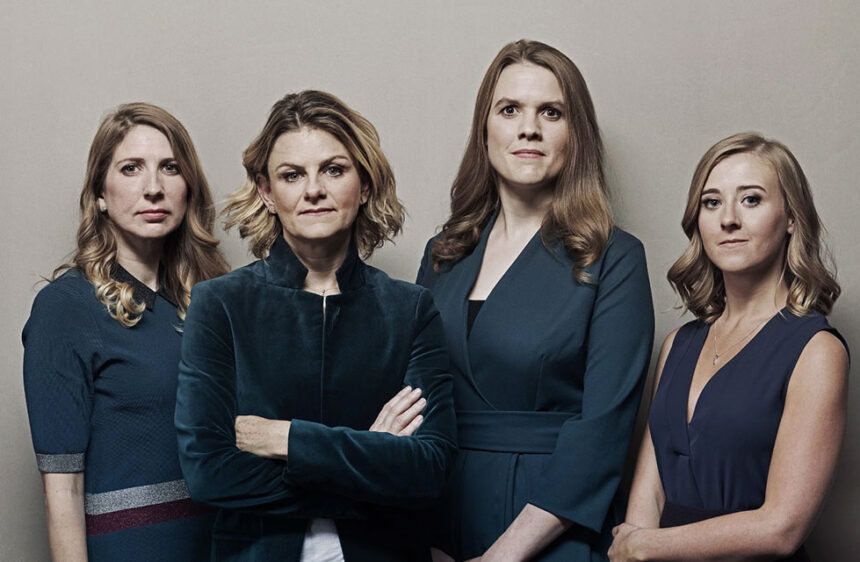
For years, French journalism has prided itself on defending democracy, giving voice to the voiceless, and speaking truth to power. But within the very walls of these revered institutions, another truth has long gone unspoken: the pervasive, systemic gender bias faced by women journalists. Camille Girard, a tenacious media critic and investigative reporter, has become the face of a movement to finally confront that silence.
From intern to newsroom watchdog, Girard has emerged as both a chronicler and a challenger of sexism in French media. Her reporting, advocacy, and unflinching honesty have forced a reckoning in the industry, bringing to light discriminatory practices, gendered double standards, and the invisible labor women carry in newsrooms across the country.
This is the story of how Camille Girard broke the silence—and why the French media can no longer ignore her voice.
A Career Born in Frustration
Camille Girard’s journey into journalism was fueled not just by a passion for storytelling, but also by frustration. “From my first internship, I noticed how differently I was treated,” she recalls. “Male interns were invited into editorial meetings. I was asked to take notes or make coffee.”
Born in Lyon in 1987 and educated at Sciences Po and the Centre de Formation des Journalistes (CFJ) in Paris, Girard began her career with high expectations. She was bright, well-read, and fiercely committed to public-interest journalism. But over and over, she encountered subtle—and sometimes overt—barriers.
Assignments on politics and economics, the traditional power beats, were handed to male reporters. Female colleagues, including Girard, were often steered toward “soft” topics—fashion, culture, education—regardless of their interests or expertise. “It was as if the newsroom had already decided what kind of journalist I was allowed to become,” she says.
Turning the Lens Inward
Rather than accept the status quo, Girard turned her journalistic skills toward the industry itself. In 2017, she launched a blog titled Le Miroir Brisé (“The Broken Mirror”), where she anonymously published testimonies from women journalists across France.
The stories poured in. Women spoke of being passed over for promotions, silenced in editorial meetings, subjected to harassment, and dismissed when they complained. Some detailed how they were asked to “smile more on air,” while others recounted being excluded from field assignments for being “too emotional” or “a liability.”
Within months, Le Miroir Brisé had gone viral. Girard eventually outed herself as the author, transforming her from a mid-level reporter into a national voice on gender equality in journalism.
Investigating the Institutions
Girard’s reporting quickly moved beyond testimonials. With the precision of a trained investigator, she began collecting hard data: salary disparities, hiring practices, boardroom compositions, and promotion rates across French media outlets. Her landmark 2019 report, Silencieuses à la Une (“Silent on the Front Page”), revealed that only 17% of French newspaper editorial boards were composed of women—even though women made up more than half of journalism graduates.
The report sent shockwaves through the industry. It named names, charted patterns, and included whistleblower accounts that challenged the reputations of some of France’s most respected media houses.
One editor-in-chief resigned weeks after the report’s release. Several newsrooms launched internal audits. Public broadcasters came under parliamentary scrutiny. What had once been dismissed as “grumbling” was now being discussed on national television.
Facing the Backlash
Girard’s work made her powerful enemies. Some colleagues accused her of “attacking journalism itself.” Others painted her as an “activist, not a journalist.” Online abuse surged. She received anonymous threats and was doxxed by far-right bloggers.
She was also subtly punished in professional circles. Invitations to speak on mainstream panels dried up. Stories she pitched were suddenly deemed “not relevant.” But Girard stood firm.
“Silence protects the abuser, not the abused,” she said in a televised interview in 2021. “If journalism can’t look at itself with the same scrutiny it applies to others, then it has no moral authority.”
A New Kind of Journalism
In response to the professional isolation, Girard doubled down. She co-founded L’Encrage, an independent digital newsroom with a mission to practice intersectional, inclusive journalism. Funded by subscriptions and grants, L’Encrage quickly became a hub for investigations on gender, race, labor, and power.
Their exposé on sexual harassment at a major French TV channel in 2022 was nominated for the Albert Londres Prize. It included not just survivors’ testimonies but also an examination of HR policies, legal loopholes, and the complicity of managers who turned a blind eye.
Girard’s team used innovative reporting techniques: anonymized databases, secure whistleblower portals, and collaborative reporting with feminist NGOs. “Our goal is not just to expose harm, but to explain the systems that allow it,” Girard explained.
The Cultural Shift She Helped Spark
Today, the ripple effects of Girard’s work can be seen across French media. Several outlets have appointed diversity editors. Gender bias training is now part of onboarding at major newsrooms. Anonymous reporting channels have been introduced for staff experiencing discrimination.
Perhaps most importantly, the next generation of journalists now enters the profession with language, tools, and expectations that didn’t exist a decade ago.
“Young women come up to me after talks and say, ‘Because of your work, I knew it wasn’t just me,’” Girard says. “That’s everything.”
Pushing Beyond Gender
While her early work focused primarily on gender bias, Girard has since broadened her lens to examine how class, race, and disability intersect within journalistic structures. “We can’t talk about sexism in a vacuum,” she insists. “A newsroom that excludes women also tends to exclude people of color, queer people, and those from working-class backgrounds.”
In 2023, she spearheaded a series titled Les Invisibles du Journalisme (“The Invisibles of Journalism”), highlighting the experiences of marginalized media workers—including janitorial staff, freelance fact-checkers, and regional correspondents—whose labor keeps the industry afloat but is rarely acknowledged.
Her work has forced many in French media to confront an uncomfortable truth: that journalism, while noble in purpose, is often exclusionary in practice.
International Recognition and Influence
Girard’s efforts have not gone unnoticed abroad. She was invited to speak at the International Journalism Festival in Perugia, featured in The Guardian and Der Spiegel, and awarded the 2024 Reporters Without Borders Award for Courage.
She has also advised media organizations in Belgium, Quebec, and Senegal on building more inclusive editorial policies. “France is not unique,” she notes. “These patterns exist everywhere. The challenge is global, and so is the resistance.”
Critics and Controversies
Not everyone celebrates Girard’s rise. Some argue that she conflates advocacy with objectivity, while others accuse her of “dividing” an already fragile industry. More conservative editors have pushed back on her suggestions, labeling them “ideological overreach.”
To these critics, Girard responds: “Calling out bias is not bias. It’s accountability. And if your newsroom can’t stand being questioned, maybe it’s not as strong as you think.”
She’s also aware of the dangers of becoming a symbol. “I don’t want to be the only one,” she says. “I want a media ecosystem where there are hundreds of Camilles—each bringing their own lens, their own story, and their own fight.”
The Road Ahead
Girard is now developing a book based on her years of reporting and activism, tentatively titled Behind the Byline: Power, Silence, and Change in the French Press. She’s also mentoring a cohort of young female and nonbinary journalists through a fellowship she helped establish in partnership with the CFJ.
Asked what keeps her going, she doesn’t hesitate: “The truth. And the belief that journalism can be better. Not perfect—but better.”
She continues to report, write, and organize—not because she enjoys being in the spotlight, but because she understands what’s at stake.
“If we allow inequality to thrive within the very institutions that claim to defend democracy, then we’re lying to the public,” she says. “And I didn’t become a journalist to lie.”
Conclusion: Changing the Script
Camille Girard didn’t just break the silence—she rewrote the script. She has shown that investigative journalism doesn’t have to stop at politics and crime; it can turn inward, challenge its own norms, and still serve the public.
In doing so, she’s redefined what it means to be a media critic in France: not a sideline commentator, but a frontline reporter. Not a complainer, but a reformer. Not a disruptor, but a builder of something better.