


A Voice From the Fringes, for the Nation
For decades, the “banlieues”—France’s suburban neighborhoods often marked by economic struggle and social marginalization—have been spoken about, seldom with. Framed in the media as zones of unrest, crime, or failed integration, these communities have rarely had the power to control their own narrative.
But Leïla Kaddour is changing that.
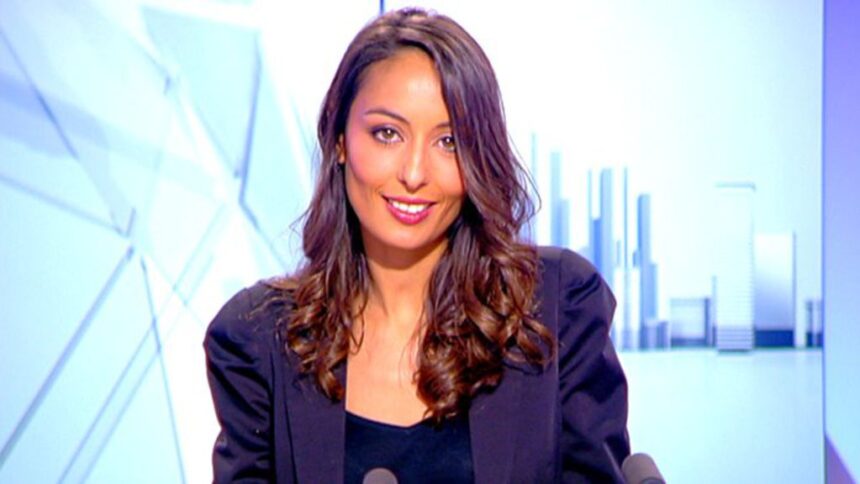
As a prominent journalist and television presenter with Algerian heritage and deep personal ties to the banlieues, Kaddour has become one of France’s most influential advocates for media inclusion. Through her reporting, outreach, and on-air presence, she is not only giving voice to France’s marginalized youth but transforming how the nation sees itself.
This is the story of how Leïla Kaddour became the microphone for a generation that refused to be silenced.
Origins in the Margins
Born in 1980 in Aurillac, central France, and raised in the Parisian suburb of Seine-Saint-Denis, Leïla Kaddour grew up straddling two worlds. At home, she was immersed in the rhythms of Algerian culture, with its oral traditions, political conversations, and deep sense of community. At school and in public life, she confronted the subtle—but unmissable—message that children from the banlieues were lesser.
Her parents, both educators, instilled in her a fierce sense of intellectual curiosity. “They believed education was our way to prove everyone wrong,” Kaddour has said in interviews. But even with academic excellence, barriers loomed.
At journalism school, she was often the only woman of North African descent in the room. “Professors would compliment me for being ‘so articulate’—as if it were a surprise,” she recalled in a 2023 roundtable on diversity in media. “That’s when I understood that visibility was not enough. We had to change perception.”
Climbing the Media Ladder
Kaddour’s early years in journalism were marked by hard work and persistence. She started in radio, working behind the scenes at France Inter, before gradually becoming a presenter. Her intelligence, poise, and nuanced approach to sensitive topics made her stand out.
She became a recognizable face on France 2’s Journal Télévisé, eventually co-anchoring the weekend news—a historic role for a woman of Maghrebi background. But even as she rose in prominence, Kaddour remained deeply connected to the struggles of the banlieues.
“Every time I was on air, I knew there were kids in Seine-Saint-Denis or Marseille or Toulouse who saw me and thought, ‘If she’s there, maybe I can be too.’ That knowledge never left me.”
Challenging the Media Narrative
It wasn’t long before Kaddour began pushing back on how mainstream media portrayed the banlieues.
For decades, French TV coverage of suburban neighborhoods focused overwhelmingly on riots, police presence, or religious extremism. Rarely did the public see the talent, resilience, and culture thriving in those communities. Kaddour decided to change that—from inside the system.
In 2018, she began producing a documentary series titled Micro Ouvert (“Open Mic”), dedicated to showcasing youth-led projects, community activism, art, and entrepreneurship in underreported areas. Each episode featured a different suburb, with local youth narrating their own stories, often in spoken word, rap, or their native tongues.
One of the most powerful episodes profiled a high school debate team from Trappes that had defeated elite Parisian schools in a national tournament. Another followed a group of girls in Saint-Denis creating a digital literacy platform for immigrant mothers.
The response was overwhelming. Viewers praised the program for its authenticity and humanity. “It was the first time I saw people who looked like me on national television, not as suspects, but as leaders,” wrote one viewer in an open letter to Kaddour.
Advocacy Off the Screen
Kaddour’s impact extends far beyond the studio. She has become a tireless advocate for diversity in journalism—not as a buzzword, but as a structural imperative.
In 2020, she co-founded Médias pour Tous (“Media for All”), a nonprofit dedicated to training and mentoring youth from marginalized backgrounds for careers in journalism and media production. The organization offers workshops in writing, audio storytelling, fact-checking, and media ethics. Most importantly, it provides access to internships and professional networks often closed to banlieue youth.
“Talent is everywhere, but opportunity is not,” Kaddour explains. “If we want to change how France is told, we need to change who’s telling it.”